UP TO 30% OFF FOR NEW CUSTOMER OR BUY BUNDLE


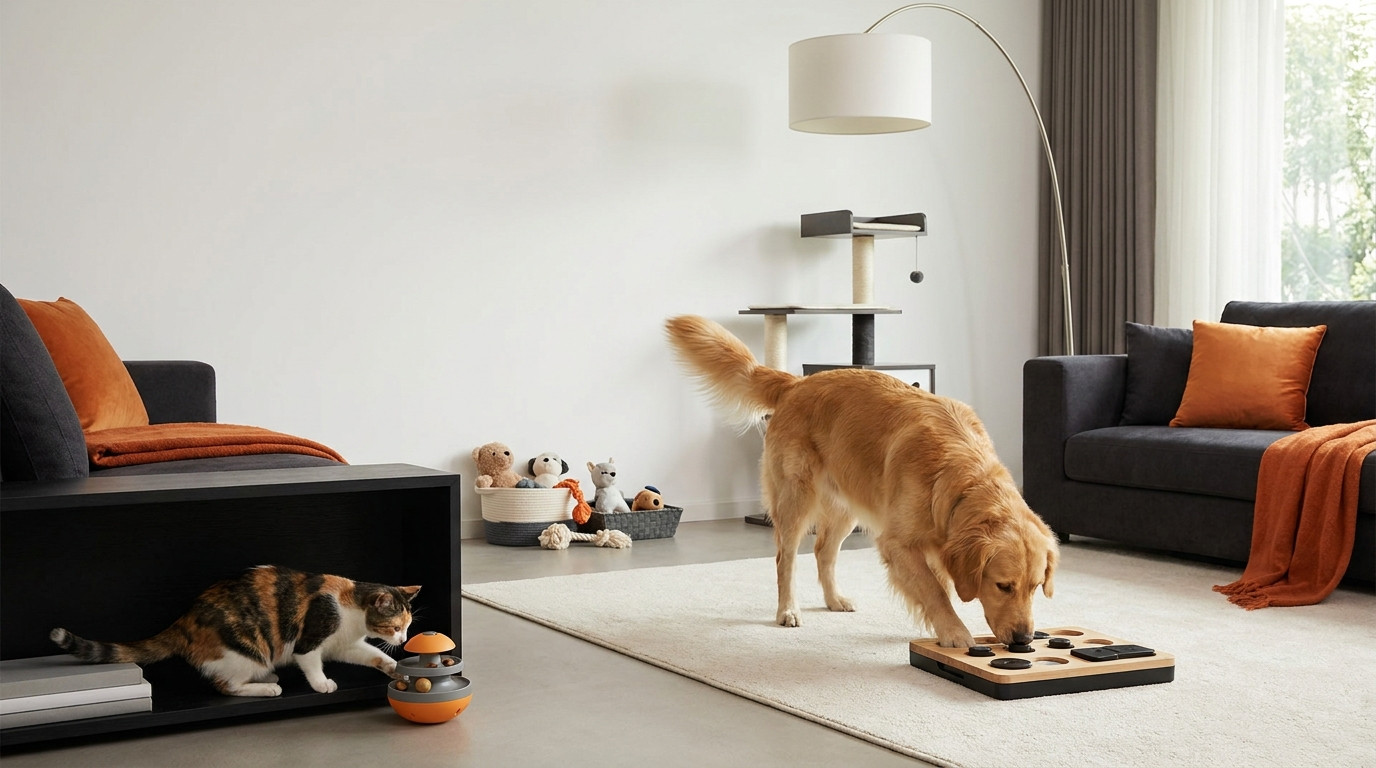
Simple Ways to Keep Your Pet Mentally Engaged
Pets need more than food, water, and a comfortable place to sleep.
They also need opportunities to explore, play, investigate, and use their natural behaviors.
Just like physical activity, mental stimulation can be an important part of a pet's everyday routine. And keeping your pet mentally engaged doesn't necessarily require expensive toys or complicated activities.
Sometimes, the simplest ideas can make everyday life much more interesting.
Here are some easy ways to give your pet more opportunities to think, explore, and stay engaged.
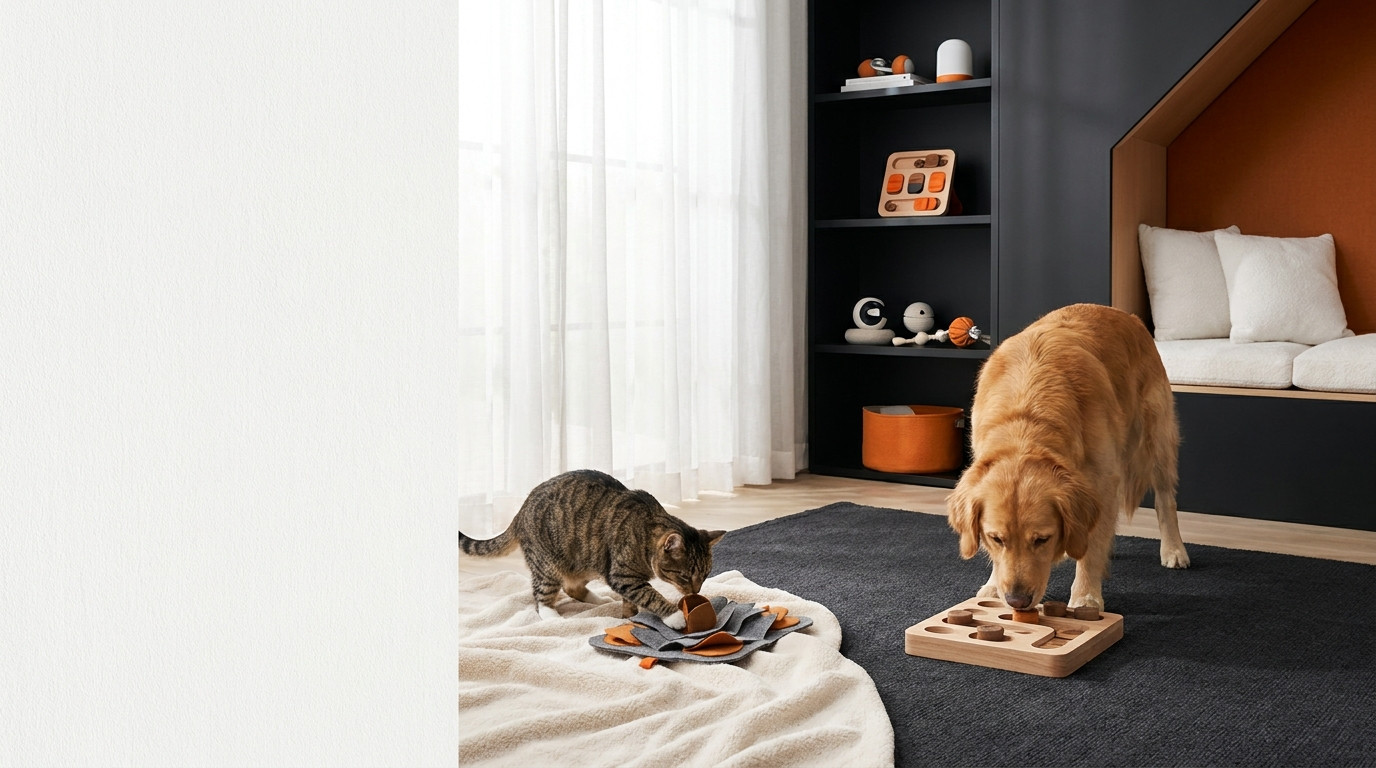
1. Turn Mealtime Into an Activity
Mealtime doesn't always have to mean putting food in a bowl and walking away.
Depending on your pet and their normal diet, you can sometimes make feeding more engaging by using an appropriate puzzle feeder, slow feeder, or food-dispensing toy.
These can encourage pets to work for their food rather than consuming it immediately.
However, make sure any feeding method you use is appropriate for your pet and doesn't prevent them from getting the food they need.
2. Introduce Puzzle Toys
Puzzle toys give pets a simple challenge to solve.
Some require them to move pieces, find hidden treats, or figure out how to access a reward.
Start with something appropriate for your pet's experience level.
Too easy?
Your pet may lose interest.
Too difficult?
They may become frustrated.
The goal is to find something challenging enough to be interesting without becoming overwhelming.
3. Rotate Their Toys
Here's a simple trick many pet owners overlook:
You don't have to keep every toy available all the time.
Instead, rotate some of your pet's toys.
Put a few away for a while and bring them back later.
A toy that hasn't been seen for several days can suddenly become interesting again.
This can also help keep your home more organized.
4. Create Opportunities to Explore
Pets naturally investigate their surroundings.
Give them safe opportunities to explore different environments, textures, smells, or objects appropriate for their species.
For example, you might create a simple enrichment area with safe items that encourage investigation.
The important thing is to supervise new activities and make sure everything you provide is appropriate for your particular pet.
5. Try Short Training Sessions
Training isn't only about teaching commands.
It can also provide mental stimulation.
Short sessions can give pets an opportunity to learn something new while spending quality time with you.
Depending on your pet, you might work on:
- Basic cues
- New behaviors
- Recall
- Targeting
- Simple tricks
- Cooperative handling
Keep sessions short and positive.
A few focused minutes can be more useful than one long session.
6. Use Interactive Play
Interactive play is a great way to combine movement and mental stimulation.
Instead of simply giving your pet a toy, participate in the activity when appropriate.
Change the pace, introduce different movements, or create simple challenges that encourage your pet to think and respond.
Just make sure the activity is appropriate for your pet's species, age, physical abilities, and temperament.
7. Give Your Pet Something New to Investigate
Novelty can make ordinary days more interesting.
A new safe toy, a different enrichment activity, or a change to their environment can give your pet something new to investigate.
You don't need to constantly buy new products.
You can often create variety by changing how you use the things you already have.
8. Make Use of Their Natural Behaviors
Different animals naturally enjoy different types of activities.
Dogs may enjoy sniffing and searching.
Cats often enjoy opportunities to stalk, chase, climb, or investigate.
Birds may enjoy foraging and manipulating objects.
Small animals may enjoy exploring tunnels, hiding areas, or appropriate enrichment.
The key is to think about:
“What does my pet naturally enjoy doing?”
Then find safe ways to encourage those behaviors.
9. Create a Simple Foraging Activity
For appropriate pets, foraging can be an excellent enrichment activity.
Instead of making food immediately available, an appropriate portion can sometimes be placed in a safe puzzle or enrichment setup that encourages your pet to search or work for it.
The activity should always be designed around the animal's normal diet and safety needs.
10. Don't Forget About Social Interaction
For many pets, interaction with their human family is itself enriching.
Spend some time simply engaging with your pet.
Talk to them.
Play with them.
Practice training.
Explore together.
Give them attention.
Mental stimulation doesn't always require a gadget.
Sometimes your time is the most valuable enrichment you can provide.
11. Change the Routine Occasionally
Pets often benefit from predictable routines, but small changes can provide new experiences.
You might introduce:
- A new appropriate toy
- A different enrichment activity
- A new training exercise
- A new safe area to explore
- A different play routine
Avoid making changes that unnecessarily stress your pet.
The goal is interesting—not overwhelming.
12. Watch Your Pet's Response
Not every enrichment activity will be a hit.
That's completely normal.
One pet might love puzzle toys while another prefers interactive play.
Pay attention to what your pet naturally chooses and enjoys.
Look for signs that they are interested and engaged, and stop activities that cause obvious frustration, fear, or discomfort.
Your pet is the best guide to what enrichment works for them.
🧠 Simple Mental Enrichment Ideas
Looking for something you can try today?
Here are a few simple ideas:
☐ Rotate a few toys
☐ Try an appropriate puzzle feeder
☐ Practice a new training cue
☐ Create a safe exploration area
☐ Introduce an appropriate new toy
☐ Play an interactive game
☐ Try a suitable foraging activity
☐ Spend dedicated one-on-one time together
☐ Change an enrichment activity instead of simply adding more toys
You don't need to do all of them.
Pick one and see how your pet responds.
How Much Mental Stimulation Does a Pet Need?
There's no universal number that works for every pet.
Mental stimulation needs can vary depending on:
- Species
- Age
- Personality
- Energy level
- Health
- Environment
- Existing routine
A young, energetic pet may need very different enrichment from an older animal.
Instead of focusing on a specific number of activities, focus on quality and variety.
Give your pet regular opportunities to interact with their environment, learn, explore, and engage in natural behaviors.
Mental Enrichment Doesn't Have to Be Expensive
One of the biggest misconceptions about pet enrichment is that you need to constantly buy new toys and gadgets.
You don't.
A cardboard box, a simple training game, a safe exploration opportunity, or a few minutes of interactive play can sometimes be enough to make a normal day more interesting.
The important thing isn't how expensive the activity is.
It's whether your pet gets an opportunity to think, explore, and enjoy themselves.
Keep Pet Life Interesting
A happy pet's life isn't just about meeting basic needs.
It's also about giving them opportunities to experience, explore, and engage with the world around them.
Start small.
Try something new.
Watch what your pet enjoys.
Then build those activities into your normal routine.
At OddlyPet, we love finding clever products that make everyday pet life more interesting, easier, and more enjoyable.
Because sometimes the best pet products are the ones that make you think:
“Why didn't I know about this sooner?”
Odd Products. Smart Solutions. Happier Pets.
SHARE
0 comment
Be the first to comment